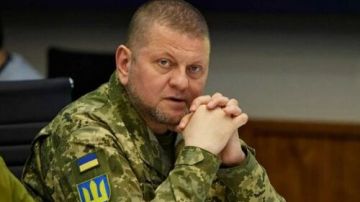
A few days ago, Valery Zaluznhy, Chief of Staff of the Ukrainian Army, produced a 9-page public text, accompanied by an interview with The Economist, which caused quite a stir. Although tempered by a description of Russian trampling and considerable Russian losses, it is practically a declaration of failure of the « counter-offensive » more or less officially launched on June 6, after many hopes had been pinned on it. The maximum advance is 17 km, the pocket created at Robotyne is locked, and so on. These facts were known before he presented them, but it’s an important event that he’s the one to do it, and publicly.
To sum up, Zaluznhy explains that it was a mistake to hope for a breakthrough similar to the one at Kupiansk, on the Kharkiv front, at the end of 2022, but more extensive, even as far as the Crimea, because this was not possible for four sets of reasons. These reasons are, firstly, the absence of any Ukrainian air superiority, which refers to the non-delivery of F16s and other promised Western weapons; the same goes for counter-battery aimed at Russian minefields; the poor management of human reserves, with Zaluznhy seemingly calling for legislative changes to reinforce militarization; and Russian superiority in terms of IT, whatever one may say, and jamming, which again calls for technological assistance but also progress in the organization and functioning of military commands.
That such a leader – Ukraine’s top military officer – should put all this forward is controversial, as he is accused of ruining his own troops’ will to advance. But very clearly, he no longer believes in this possibility without progress in the four areas mentioned of aviation, anti-mine devices, human reserve management and computer/information mastery, and he explains that these four points are necessary to avoid a long-lasting war of position, in which Russia is at an advantage.
Technically speaking, everything he says is true and has already been pointed out by specialists. Politically speaking, it’s not often that a military leader makes an open criticism/self-criticism in the midst of a war and on this scale. The question is: why did he do it, and why at that precise moment?
There are many ways of answering this question, concerning military aid to Ukraine and therefore above all the United States, concerning Russia and its army, and concerning Ukrainian society.
In his speech on his return from Israel, Joe Biden called on the US Congress to vote for coupled aid to Ukraine and Israel, presenting the two countries’ radically different causes as the same « fight for freedom ». But the mass of elected Republicans, Trumpists or not, anti-Semitic evangelicals included, don’t want to link the two issues, because they want to let go of Ukraine while going all out for Israel. What’s more, the pro-Palestinian wing of the Democrats includes sectors tempted to reject aid to Ukraine. The new Republican speaker of the House of Representatives, Mike Johnson, is explicitly in favor of Ukraine/Israel « decoupling ». In short, congressional approval of the military aid Biden is calling for in the current crisis of US institutions, let alone its actual arrival in Ukraine, is far, very far from a foregone conclusion.
On the other hand, 20% of US naval forces, concentrated in two aircraft carriers and a nuclear-powered ballistic missile submarine, have been grouped around the Middle East in the space of a few days. Ukraine has never had a « no fly zone ». The famous F16s are now operating in Syria, but we’ve never seen a single one in Ukraine. Ukrainians cannot fail to see what is, in reality, a decoupling, confirming in passing that Zelensky’s pro-Israeli diplomatic turn does not correspond to the real interests of his war of liberation.
Zaluznhy’s paving stone in the pond thus resounds like a protest addressed to Washington and NATO. It cries out what we ourselves had written at the start of the « counter-offensive »: never before in military history has such a counter-offensive been mounted, and in these conditions achieved results that were in fact honourable, which continues with limited progress on the southern and eastern banks of the Dnieper, by an army that is officially supported but knowingly deprived of the key air and anti-aircraft means to succeed, condemned, in short, to the methods of the First World War by the 21st century’s weapons owners.
The cause of this situation is neither logistical nor budgetary, but political: the United States and the European powers fear Russian defeat and the possible fall of the Rashist/Putin regime far more than the unlimited suffering of the Ukrainian people. That’s the reality.
As far as Russia is concerned, Zaluznhy, a good military man, has mastered the technical issues, but has not grasped, or wanted to grasp, the fundamental political dimension of the two major series of defeats of the « special military operation », namely, the initial failure of the BlitzKrieg in February-March 2022 in the face of the nation’s mass uprising in Ukraine, when Russian soldiers understood nothing of their situation and their « mission », followed by the decomposition of part of the Russian army on the Kharkiv front at the end of 2022, with the collateral effect of the evacuation of Kherson. In these two key moments, the Russian setbacks to the initial advance were not primarily due to technical military causes, but to moral and political ones. This leverage came from the Ukrainian people, in their armed and unarmed resistance, and from resistance to the war in Russia and on the part of non-Russian peoples. But Putin’s dictatorship has gained strength, even if the supreme leader has been worn down and devalued since the Prigozhin putsch. It’s rotten, but locked up, and the same can be said of its army. A further collapse of the army, which is possible and to which the Ukrainian people and soldiers aspired before last June, perhaps even going as far as Crimea, also requires political and moral factors.
This rotten but under control army can have a terrible impact by sacrificing its men, especially non-Russians, as has been happening at Avdiivka since October 7, coinciding with the pogromist provocation by Hamas near Gaza.
In Ukraine, society is increasingly reacting, opposition to oligarchic and, quite simply, capitalist and neoliberal practices is growing, and two series of popular demonstrations have emerged, growing, in recent weeks, which might seem contradictory.
We have, as reported by comrade Patrick Le Tréhondat from his contacts, frequent demonstrations, of up to 1000 people in Mykolaiv, which are demonstrations for the army, and for local authorities not to invest in expenditure deemed non-priority, or even lavish or linked to corruption, but to help the soldiers. We also have, as recently in Odessa according to the LCI channel, demonstrations for more frequent leave, with Ukrainian flags in the lead but criticizing recruitment methods, with many young people having « fled » abroad, even though they too are for the liberation of the country.
Are these two types of demonstration contradictory? Basically, not at all. They want to win the war through the methods of popular involvement, and in this context the demand for more troop rotations is perfectly legitimate, and in fact recognized by Zaluznhy. Dmytro Guzynsky , a trade unionist and miner from the Donbass region, belonging to the KCTU, the Confederation of Independent Trade Unions of Ukraine, which emerged from the strikes of 1989-1992 (like its cousins, the Belarussian BKDP and the Russian KTR), was killed in action on November 2; he had been at the front continuously since his enlistment on March 14, 2022 …
Opinion polls show the end of the initial unanimity at the time of the invasion: the majority of Ukrainians say loud and clear that they want to win the war, but this can, and indeed must, go hand in hand with criticism of the authorities in power at all levels.
In view of this social situation, Zaluznhy’s vague recommendations seem to lean more towards vertical command and authoritarianism: a sure-fire failure. It was self-organization from below that saved the country in February-March 2022. It is this key experience, both democratic and revolutionary, that is the Ukrainian strength, including, in the final analysis, its military strength.
President Zelensky has distanced himself from his chief of staff, while retaining him (which opens the way to speculation on a possible division of roles between them), denying any deadlock or pause and reaffirming his refusal to negotiate without the withdrawal of Russian troops from the entire territory. But the unofficial pressure and the little music of the West to force Ukraine to negotiate and thus save Putin, but certainly not save peace, is becoming more pressing and heavier.
In this vice of contradictions, Zelensky, swept to power by a wave of rejection from all the oligarchs, a weak leader between oligarchic interests until February 24, 2022, is posing as « Bonaparte » (in this case, it’s worth making that nuance we no longer think of in France when we speak of « Bonapartism »: he’s posing as Bonaparte rather than Napoleon!) and has been, in fact, since he refused Biden’s cab and demanded tanks.
But he is covering up the neo-liberal policy that is being pursued in the midst of war, against the needs of war, while posing as the No. 1 enemy of the oligarchs and the No. 1 critic of corruption, with initiatives taken from above that are bound to be impotent in the long term. He has just opened up the possibility of holding presidential elections on the constitutionally scheduled date, at the end of March 2024, despite martial law. No doubt he believes that, all things being equal, he will be easily re-elected.
Such elections in an amputated territory are a real democratic issue. From the point of view of full democracy, and therefore of popular self-organization, and from the point of view of military victory, which is always possible and necessary, free elections at all levels would be more appropriate than more or less plebiscitary presidential elections, enabling the corrupt to be ousted and the 2022 generation to be promoted to all levels of political, economic and social power.
This issue concerns our Ukrainian comrades first and foremost, you may say. Of course, but defeating Russian imperialism is also an internationalist issue. Democracy and arms are linked: democracy is not softness, it’s the people in arms, and arms are needed for Ukraine to defend and liberate itself, not for Gaza to be crushed and starved !
VP, 06/11/2023.
 Arguments pour la lutte sociale